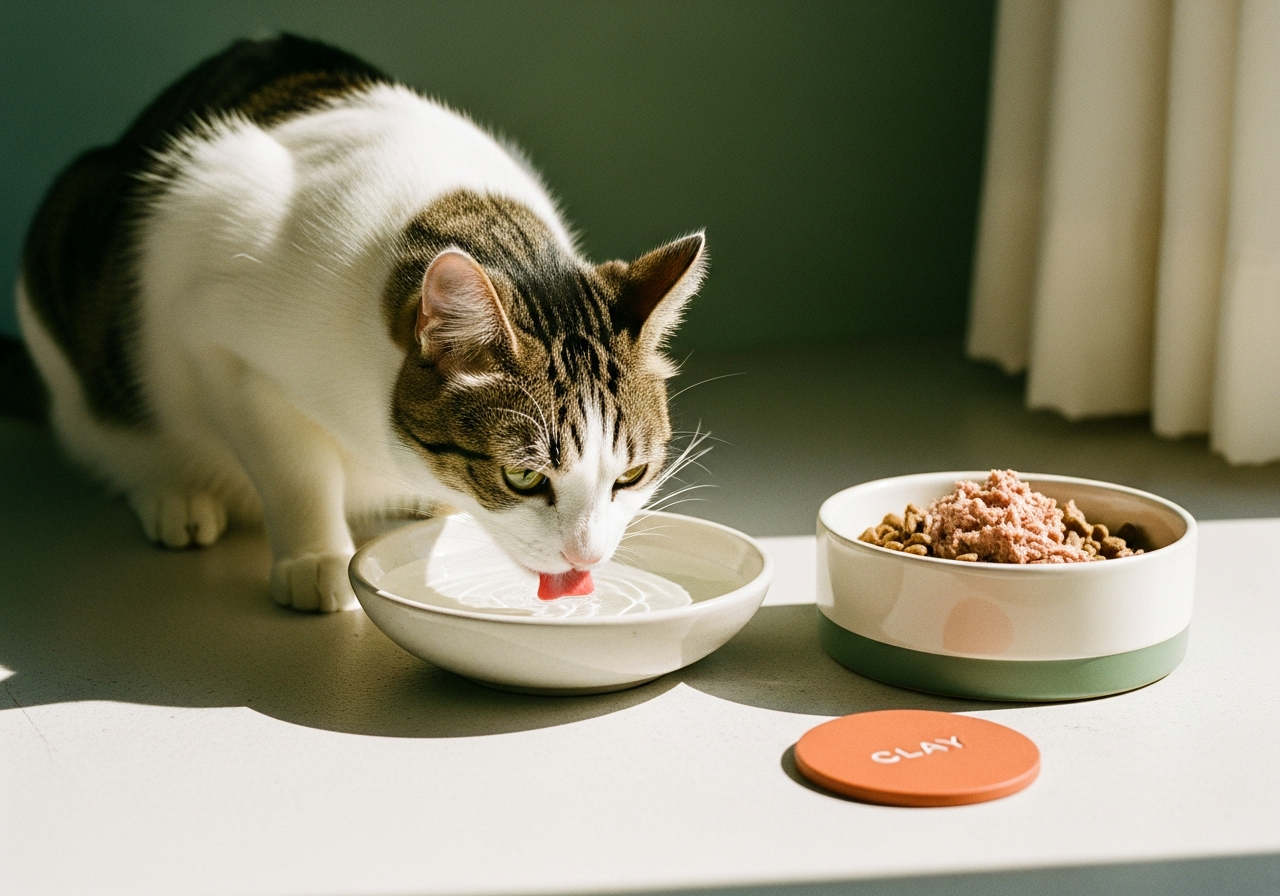
Urinary issues are one of the most common reasons cats end up at the vet — and one of the most diet-influenced. That doesn't mean every cat needs a prescription food for life, but it does mean what's in the bowl matters more for cats than for almost any other pet. The goal here isn't to treat an active condition (that's your vet's job), it's to find everyday foods that support a healthy urinary tract and reduce the likelihood of crystals, blockages, or chronic inflammation becoming a problem in the first place.
How to Think About This Category
Cats evolved as desert animals who get most of their water from prey. A dry-kibble-only diet keeps cats in a state of mild, chronic dehydration — and concentrated urine is one of the biggest risk factors for urinary crystal formation and feline idiopathic cystitis (FIC). So before we even get to specific brands, the most important dietary shift you can make for a cat with urinary concerns is adding or switching to wet food, raw, or freeze-dried rehydrated food. Hydration is the headline. Ingredient quality is the supporting story.
The single most effective dietary change for feline urinary health isn't a specific ingredient — it's moisture. A cat eating wet food consistently produces more dilute urine, which makes crystal formation significantly less likely.
What to Look For
A good urinary-supportive cat food tends to share a few characteristics: high moisture content (at least 70–78% in wet foods), moderate protein from named animal sources, controlled magnesium and phosphorus levels, and an overall formulation that encourages a slightly acidic urine pH. Short ingredient lists with identifiable proteins are easier to work with if your cat ever needs an elimination diet down the line. Avoid foods that lean heavily on plant-based proteins or corn-based fillers — these can push urine pH in the wrong direction.
Our Picks
Smalls Fresh Cat Food — Ground Bird or Ground Other Bird
Smalls is a subscription fresh-food company that quietly does some of the best work in cat nutrition right now. Their ground recipes are high-moisture, high-protein, and made with whole food ingredients you can actually identify. For urinary health specifically, the moisture content alone puts it ahead of most shelf-stable options, and the protein-forward formulation keeps things balanced without excess plant filler. If your cat is a picky eater, the texture tends to win them over quickly. This is a strong first pick for cats with recurrent urinary issues who are currently on dry-only diets.
Koha Limited Ingredient Wet Food
Koha is an independently owned brand that doesn't get nearly enough attention. Their limited ingredient canned foods — often single-protein, with nothing extra added — are an excellent fit for cats with urinary sensitivity, especially if there's any suspicion of a food intolerance contributing to inflammation. The Tuna in Broth and Rabbit Pâté formulas are particularly clean. Low in carbohydrates, high in moisture, easy to read on the label. A good place to start if you want something simple and traceable.
Ziwi Peak Wet Cat Food
Made in New Zealand with ethically sourced meat, seafood, and organs, Ziwi Peak's canned formulas have an exceptionally high meat content and virtually no starchy fillers. The moisture content is solid, the protein quality is among the best you'll find in a shelf-stable wet food, and the brand is transparent about where their ingredients come from. The Mackerel & Lamb or Chicken recipes work well for cats on urinary-preventive diets. It's not cheap, but the ingredient density means smaller portions go further than you'd expect.
Stella & Chewy's Freeze-Dried Raw Dinner Morsels (rehydrated)
Here's how we'd think about it: freeze-dried raw, when properly rehydrated with warm water, delivers both the nutritional profile of raw feeding and meaningful moisture content — without the handling complexity of fresh raw. Stella & Chewy's Chick Chick Chicken or Surf & Turf formulas rehydrated into a slurry are genuinely useful for cats who won't touch traditional pâté. The ingredient lists are short, the protein sources are named, and the brand has a long track record with independent pet retailers. Every pet is different, but cats who resist wet food sometimes take to rehydrated freeze-dried readily.
The Honest Kitchen Grain-Free Wet Cat Food Pours
The Honest Kitchen's poured wet food line — dehydrated or wet varieties made with human-grade ingredients — is a solid middle-ground option for households where fresh subscription food isn't practical. The Chicken recipe is simple, digestible, and produced in a human-grade facility, which means the sourcing standards are genuinely higher than standard pet food manufacturing. For cats with a history of struvite crystals especially, the low-carbohydrate, high-moisture approach here is exactly what you want to be feeding.
Farmina N&D Wet Cat Food (Pumpkin Line)
Farmina is an Italian brand with serious investment in nutritional research and a genuinely grain-free, low-glycemic formulation philosophy. Their N&D Pumpkin wet food uses small amounts of pumpkin as a digestive aid without loading the formula with unnecessary carbohydrates. The protein content is high, the fat sources are clearly named, and the brand has third-party testing they're willing to talk about. Ask your vet if Farmina's phosphorus levels are appropriate if your cat has any concurrent kidney concerns — it's worth a quick check given the protein density.
The Bottom Line
Urinary health in cats is mostly a moisture and ingredient quality story, not a prescription story for most healthy cats. Switching to or significantly increasing wet food — from brands like Smalls, Koha, or Ziwi Peak — is the most practical thing most cat owners can do. If your cat has had a diagnosed crystal type or a urinary blockage, that conversation belongs with your vet before any food change.
