Some dogs have stomachs that can handle almost anything. Others look at a new treat sideways and spend the next 24 hours reminding you of that fact. If your dog falls into the second camp, you're not alone — and the good news is that digestive sensitivity is one of the more manageable issues to address through food, once you understand what you're actually looking for.
The tricky part is that "sensitive stomach" gets used to mean a lot of different things. It might mean loose stools, frequent gas, vomiting after meals, or just a general pattern of digestive unpredictability. Before you start rotating through every limited-ingredient food on the shelf, it helps to narrow down whether the issue is a true food intolerance, a reaction to fat content, a fiber problem, or something else worth flagging with your vet. Ask your vet if the symptoms are persistent, worsening, or accompanied by weight loss — that's beyond what a diet change alone can fix.
That said, here's how we'd think about it: for most dogs with garden-variety sensitive stomachs, the goal is simplicity. Fewer ingredients, named protein sources, a moderate fat level, and a digestible carbohydrate base. You don't need an exotic formula — you need a consistent, clean one.
What to Look for
A good place to start is the ingredient list. Look for a named animal protein (chicken, turkey, salmon, lamb) as the first ingredient. Avoid formulas loaded with multiple protein sources at once, since that makes it harder to identify what's causing a reaction. Moderate fat content — somewhere in the 10–14% range on a dry matter basis — tends to sit better with sensitive dogs than high-fat formulas. Digestible carbohydrates like white rice, oat, or pea can help, and some dogs do better with added prebiotics or probiotics to support gut flora. Steer clear of artificial dyes, added sweeteners, and vague ingredients like "meat by-products" or "animal fat."
Our Picks
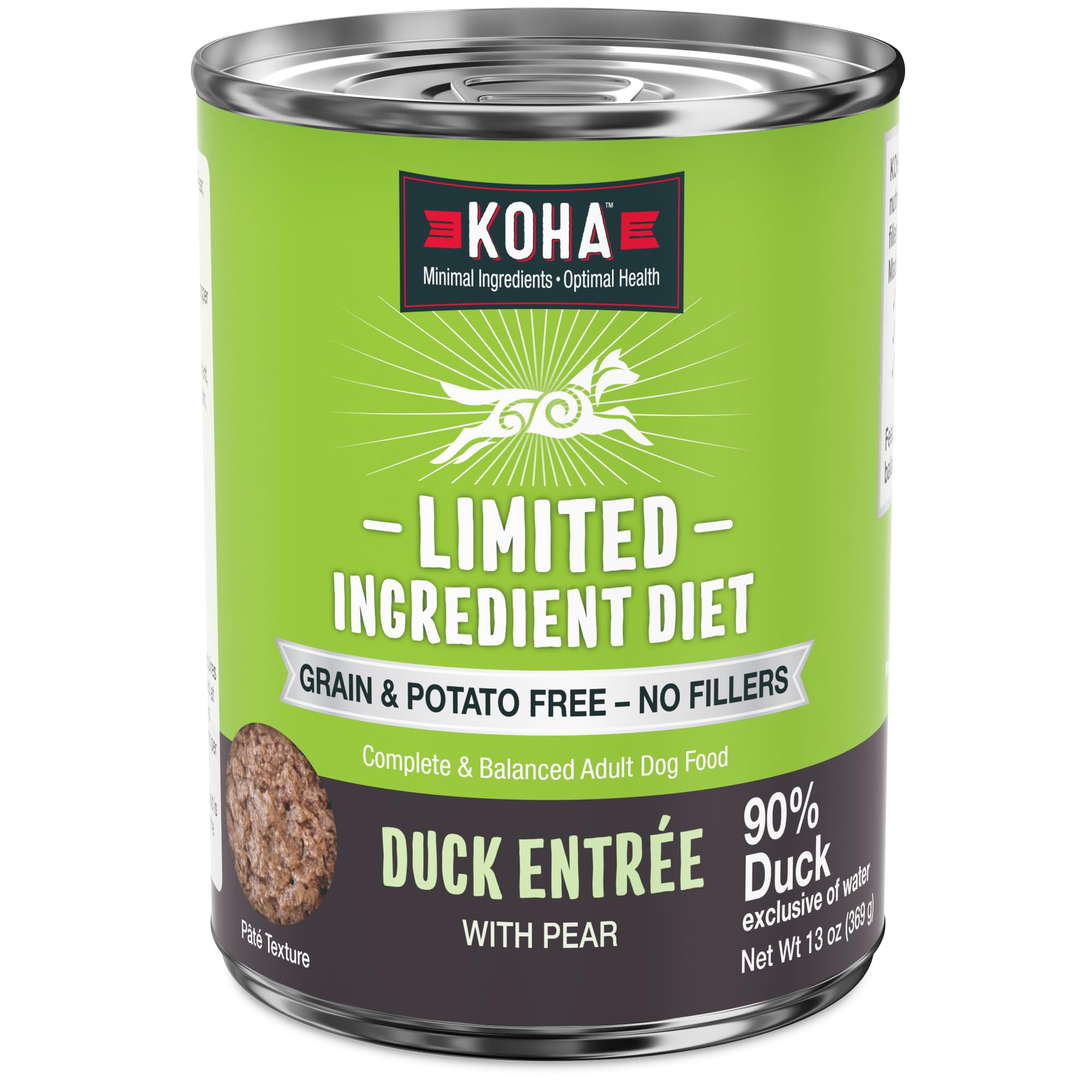
Koha Limited Ingredient Diet — Wet Food
Koha doesn't get enough attention for how well-designed their limited ingredient wet foods are. Single animal protein, short ingredient lists, and genuinely minimal processing. Their pork or duck varieties work well for dogs who've had reactions to chicken or beef — common culprits in sensitive stomach cases. The pâté texture is easy to digest, and the moisture content helps dogs who have loose stools linked to dehydration or dry food. This is a great option for dogs who need a clean slate to reset on.
Smallbatch Freeze-Dried Sliders
If your dog's stomach issues have you wondering whether whole-food ingredients might help, Smallbatch is worth a serious look. Their freeze-dried sliders use a short roster of ingredients — animal proteins, organ meat, a few produce items — and nothing else. Freeze-drying preserves nutrients without the high heat of conventional processing, which some dogs with sensitive systems tolerate noticeably better. Every pet is different, but dogs who haven't responded well to standard kibble sometimes do much better on a format like this. Start with a small bag to test tolerance before committing.
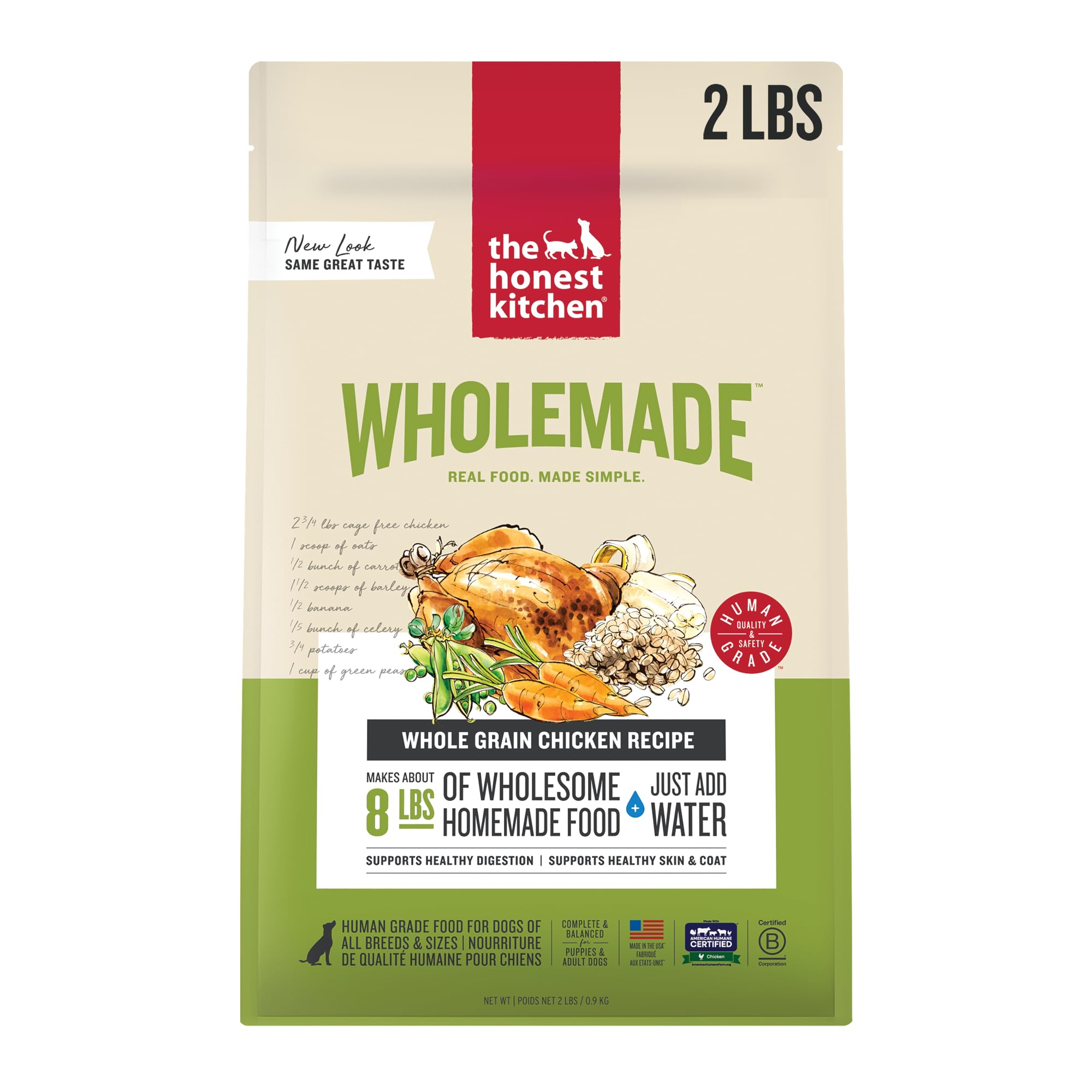
The Honest Kitchen Whole Grain Chicken Recipe
The Honest Kitchen makes dehydrated food that you rehydrate at home with warm water. It sounds fussier than it is. The benefit for sensitive dogs is real: human-grade ingredients, minimal processing, and a format that's genuinely easy on the digestive system. Their Whole Grain Chicken recipe uses a modest ingredient list with oats and barley as the carbohydrate base, both of which tend to be well-tolerated. This is particularly worth considering for smaller dogs or seniors, where digestibility matters even more.
Nulo Freestyle Limited+ Turkey & Chickpea
Nulo is an independent brand that tends to fly under the radar next to the bigger names, but their Limited+ line is one of the more thoughtfully formulated sensitive-stomach dry foods you'll find. Single animal protein, no chicken (good for dogs with poultry sensitivities), and a controlled ingredient list that makes it easier to track how your dog is responding. The kibble itself is small and uniform, which helps with digestion and works well for medium and small breeds.
Stella & Chewy's Tummy Ticklin' Turkey Blend
Stella & Chewy's built their reputation on freeze-dried raw food, and this blend applies that same approach specifically to digestive support. It includes added probiotics and digestive enzymes alongside a clean turkey base. If your dog is coming off a bout of stomach upset and needs something gentle to transition back onto, this is a solid option. The freeze-dried raw format is also useful as a food topper if you want to add digestive support without overhauling your dog's entire diet at once.
Open Farm Homestead Turkey & Chicken — Dry
Open Farm is one of the more transparent brands in the independent space — they publish sourcing details for each batch on their website, which is rare and worth appreciating. Their Homestead Turkey & Chicken dry food uses clearly named proteins and a relatively simple carbohydrate base. It's not a strict limited-ingredient formula, but for dogs whose sensitivity is mild and more about ingredient quality than protein elimination, it's a strong everyday option.
The best food for a sensitive stomach isn't the most expensive one — it's the most consistent one. Frequent switching is often the biggest driver of ongoing digestive issues.
The Bottom Line
Most sensitive stomach issues in dogs respond well to simpler, cleaner formulas with a single named protein and a short ingredient list — the brands above offer a range of formats to match your dog's needs and your own routine. Start with one option, give it 4–6 weeks before judging results, and resist the urge to keep rotating. Ask your vet if things don't improve, because sometimes what looks like a food issue is something else entirely.