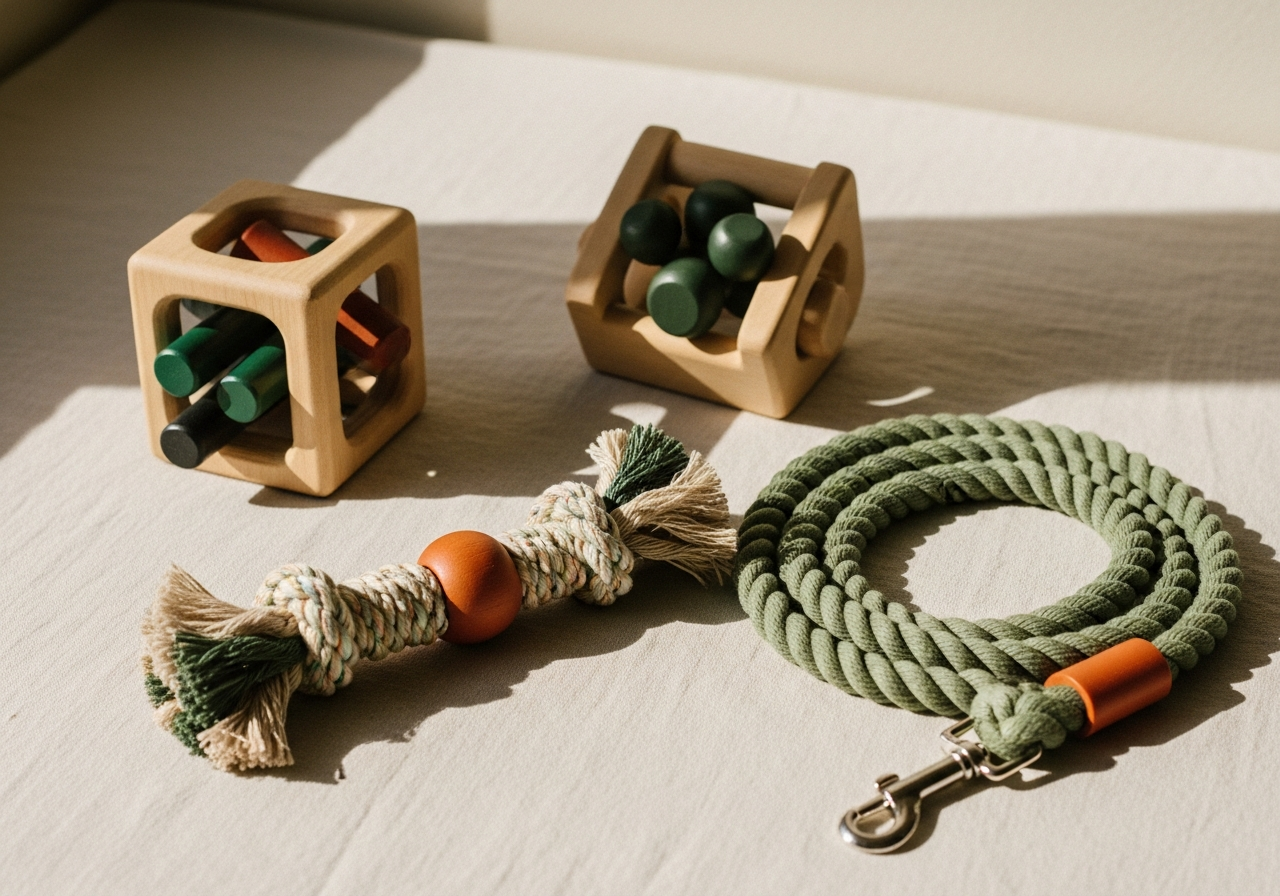
Most pet gear is built to be replaced. Toys shred in an afternoon, collars fray, leashes stiffen and crack, and the whole lot ends up in the trash on a depressingly short cycle. A handful of smaller brands are pushing back — making gear durable enough to last, repairable when it doesn't, and built from materials that aren't a fresh environmental hit every time you restock. Here's a closer look at which ones are actually worth the premium, and how to think about the category as a whole.
Why Durability Is the Real Sustainability
The most eco-friendly toy is the one you don't have to buy three times. Before any recycled-material claim, the first question is simply: will it survive your pet? A cheaply made "sustainable" toy that lasts a week is worse for the planet — and your wallet — than a tough one you keep for years. Material story matters, but it comes second to whether the thing actually holds up to your specific animal.
Buy-it-once beats buy-it-green. The gear worth paying for is both.
A second, underrated factor: end of life. A few brands now run genuine take-back or recycling programs, closing the loop instead of just selling you greener trash. Those programs are worth rewarding with your money.
Toys & Enrichment
West Paw is the standard-bearer. Their toys use recycled and non-toxic materials, they're genuinely tough (the Zogoflex line is famously hard to destroy), and the "Join the Loop" program takes back worn-out toys to recycle into new ones — a real closed loop, not a marketing gesture. Best for: power chewers and households that want a take-back option.
Nina Ottosson (now under Outward Hound) makes the modular, level-based puzzle boards that more or less invented the cognitive-enrichment category. For a bored indoor dog or cat, mental work tires them out in a way a walk often can't, and a single well-made puzzle replaces a drawer of disposable toys. Best for: indoor pets, rainy days, and anxious chewers who need a job.
Chews & Durable Goods
Benebone makes durable nylon chews shaped with curves and contours so a dog can actually hold and work them, and runs a recycling program for chews loved down to a nub. One genuine caveat: hard nylon and similar materials aren't right for every dog's teeth — match hardness to your chewer, and if you can't dent it with a thumbnail, supervise closely. Best for: persistent chewers who go through edible chews too fast.
Collars, Leashes & Accessories
Little Pine repurposes climbing rope and outdoor gear into adventure-ready leashes built to outlast the dog. If you hike, the durability is the selling point and the upcycling is the bonus. Best for: active, outdoorsy households.
Found My Animal handcrafts marine-grade rope leashes and ties its brand to adoption, with signature stamped "FOUND" tags. They're as much a statement piece as a tool, and they hold up to real use. Best for: owners who want gear with a story and a cause.
Lofty Loo is a thoughtful one for cats: elevated, accessible litter setups designed for elderly cats and for owners with mobility limitations. It's a useful reminder that "better gear" sometimes means better access and dignity, not just better materials. Best for: senior cats and accessibility-minded homes.
What to Be Skeptical Of
"Eco" and "natural" are unregulated marketing words on pet gear, the same as on food. A few things that should raise an eyebrow: vague claims with no specific material named, "biodegradable" plastics that only break down in industrial composters most people can't access, and bamboo or jute toys that look sustainable but disintegrate so fast they're effectively single-use. Ask what it's made of, how long it's likely to last, and what happens when it wears out.
How to Buy Less, Better
Start by auditing what actually gets used — most households have a graveyard of ignored toys, which is the clearest sign of buying for the human, not the pet. From there:
- Buy for your specific pet's play and chew style, not the cutest packaging.
- Favor brands with repair, warranty, or take-back programs.
- Rotate a small set of toys in and out of circulation to keep them novel instead of constantly buying new ones.
- Repair before replacing — a frayed rope toy can be trimmed and re-knotted; a chewed bed can be patched.