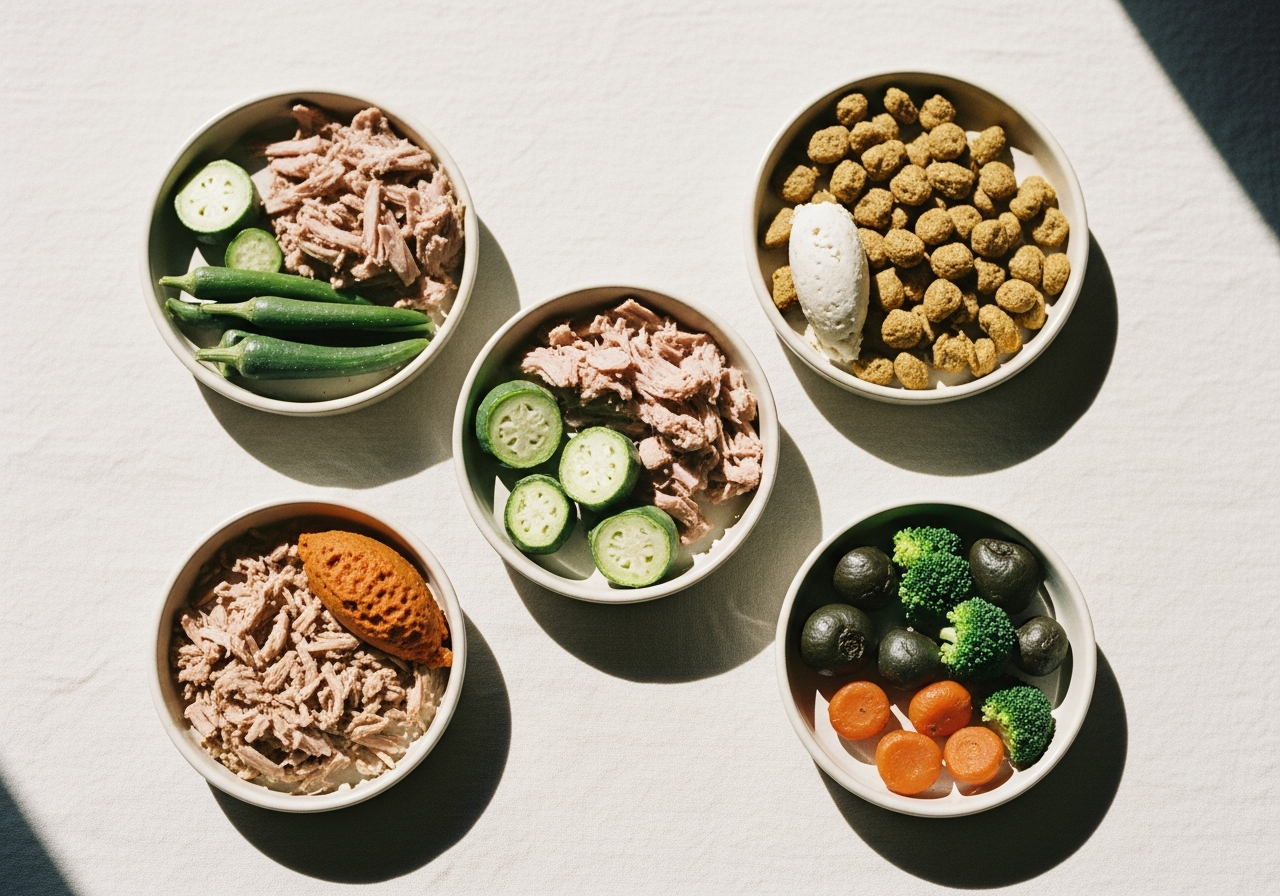
Most of what fills the big-box pet aisle comes from a short list of conglomerate manufacturers. That doesn't make it bad — plenty of mass-market food is perfectly adequate — but it does mean the most interesting, transparent, and carefully made foods are usually the ones you've never seen advertised. The U.S. pet industry crossed roughly $158 billion in 2025 and is projected to keep climbing in 2026, and a real chunk of that growth is coming from smaller direct-to-consumer brands betting that owners want to actually know what's in the bowl.
This is a reviews piece, but it's also a way of thinking. Below we walk through the formats, the brands worth knowing in each, what they realistically cost, and how to tell a genuinely better food from a well-marketed one.
First, What "Indie" Actually Buys You
"Indie" or "small-batch" is not a quality guarantee on its own. A tiny brand can still make mediocre food, and a few of the names below are no longer truly small. What earns a brand a place here is a specific, checkable set of traits:
- Named, traceable ingredients — "chicken," "beef," "salmon," ideally with sourcing you can verify, not "meat meal" or "animal digest."
- Minimal, legible processing — fresh, gently cooked, air-dried, freeze-dried, or baked, rather than heavily extruded and sprayed with palatants.
- Published sourcing and manufacturing — a company that tells you where ingredients come from and who makes the food, without you having to email customer service to find out.
- An AAFCO statement — "complete and balanced" is a regulated claim, and you want it for your pet's life stage. Toppers and mixers that aren't complete diets should say so.
The honest test of a food isn't the bag design or the founder's story. It's whether you can trace what's in it and who made it.
A quick reality check on manufacturing: many excellent small brands don't own factories. They work with co-packers like Simmons, Alphia, or NaturPak. That's normal and not a red flag — what matters is whether the brand is transparent about it and stands behind the recipe.
Fresh & Gently Cooked
This is the fastest-growing corner of the market, and the easiest on-ramp for owners leaving kibble behind.
The Farmer's Dog is the brand most people meet first, and for good reason. It's human-grade food, portioned precisely to your dog's weight, age, and activity, and delivered frozen on a subscription. You're paying for both quality and convenience — expect meaningfully more than premium kibble — but the transparency is genuine and the portioning takes the guesswork out of weight management. Best for: first-time fresh feeders and dogs who need tight calorie control.
California Dog Kitchen plays the same gently-cooked game with small-batch, human-grade meals that feel more artisanal and less subscription-machine. If the appeal of fresh food is the craft rather than the algorithm, it's worth a look. Best for: owners who want fresh without the big-brand feel.
Air-Dried & Minimally Processed
The sweet spot for a lot of households: most of the benefit of raw or fresh, with shelf stability and less hassle.
Open Farm is one of the most transparent companies in the entire space. Their traceability program lets you trace ingredients back to source by entering a lot code, and they're serious about ethical sourcing and recyclable packaging. They span kibble, air-dried, and wet, which makes them easy to standardize on across a multi-pet home. Best for: eco-conscious owners who want one brand for everything.
Carna4 is the pick for owners who want raw-style benefits in a format that behaves like kibble. Their gently-baked, whole-food nuggets use sprouted seeds for nutrients instead of a long synthetic premix, and they skip synthetic additives entirely. Best for: people who like the idea of raw but won't deal with frozen storage.
Raw & Freeze-Dried
The most involved formats, and the ones with the most fervent following — especially among owners managing allergies.
Smallbatch Pets does small-batch freeze-dried and raw with humanely raised meats and organic produce, and no fillers. The ingredient decks are short and legible, which is exactly what you want when you're trying to isolate a food sensitivity. Best for: raw feeders and pets with allergies.
Maev focuses on flash-frozen raw with human-grade formulas, including puppy-specific recipes — a life stage a lot of raw brands quietly skip, even though it's the one where getting nutrition right matters most. Best for: owners who want raw but want the formulation and convenience handled.
What This Actually Costs
Fresh and raw diets cost more than kibble — often two to four times more per day for a medium dog, and more again for large breeds. That math is worth doing honestly before you switch, because the worst outcome is starting a premium food and quietly downgrading three months later when the bill lands. A few ways to make it sustainable: use fresh or raw as a topper over a quality kibble base, reserve it for a pet with a specific need, or rotate formats. A partial upgrade you can maintain beats a full upgrade you can't.
How to Choose — and How to Switch
Don't start with the brand. Start with your pet and your constraints: freezer space, budget, life stage, and whether anyone in the house will realistically keep up with a raw routine. Then pick one format that fits your life and transition slowly over 7–10 days, mixing increasing amounts of the new food into the old. Watch four things over the following month — coat quality, energy, stool consistency, and weight.
Ask your vet before a major diet change if your pet is a puppy, a senior, pregnant, or managing a health condition like kidney disease or pancreatitis. And be a little skeptical of any brand whose pitch leans harder on fear ("big kibble is poisoning your dog") than on what's actually in their food. The best of these companies don't need the scare tactics. The food speaks for itself.