Traditional clumping clay litter is effective, cheap, and genuinely hard to beat on raw performance. It's also strip-mined through surface mining, dusty enough to be a respiratory concern, and headed for a landfill where it will sit essentially forever — sodium bentonite doesn't biodegrade. For a growing number of cat owners, that tradeoff has started to feel worse than it used to. The good news: plant-based litters have quietly gotten good enough that switching no longer means accepting a worse box.
Here's how we'd think about it. The job of a litter hasn't changed. It needs to clump tightly, control ammonia odor, and stay low-dust for your cat's airways and your own. A sustainable litter earns the swap only if it does those things nearly as well as clay — and the best ones now do.
Know Your Materials
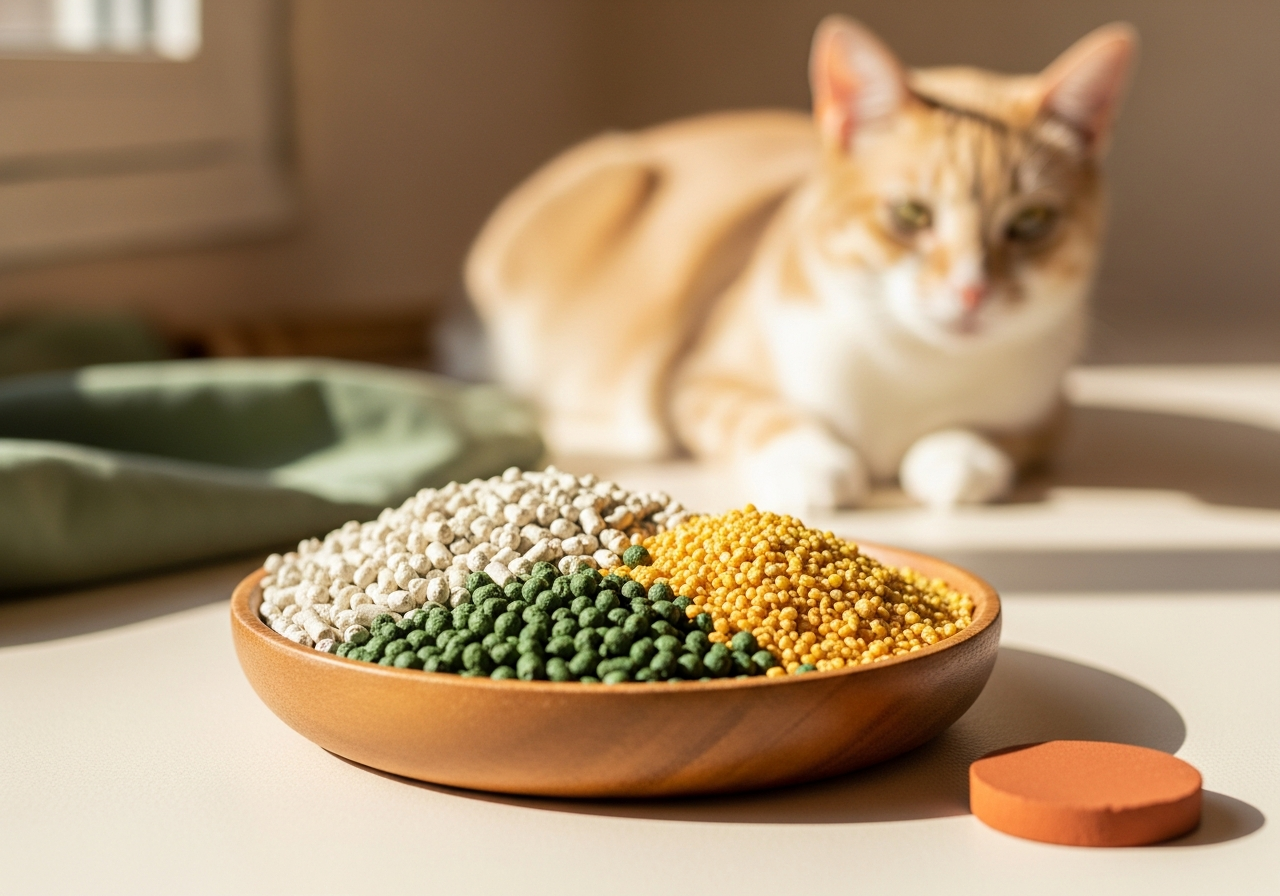
Most natural litters fall into a handful of base materials, each with a different personality:
- Corn — excellent clumping, soft on paws, widely available. The main knock is a small risk of aflatoxin mold if stored damp, so keep it dry.
- Wood fiber — great natural odor control and very low dust; tends to break into sawdust as it absorbs rather than forming hard clumps (depending on the product).
- Grass seed — lightweight and exceptional at clumping with very little dust; usually the priciest option.
- Walnut shell — strong odor control and highly absorbent, though the dark color hides things and it can stain light flooring.
- Tofu/soy and paper — very low dust and gentle, good for post-surgery cats or sensitive paws; odor control and clumping vary by brand.
The most sustainable litter in the world is useless if your cat boycotts it. Performance and feel under-paw decide everything.
What to Look For
- Clumping strength — tight, dry clumps seal ammonia in and make scooping clean. This is where cheap naturals fall down, so test it first.
- Dust level — plant fibers are generally lower-dust than clay, a real win for cats and humans with asthma or allergies.
- Odor control without fragrance — you want the material to trap smell, not perfume over it. Heavily scented litters drive plenty of cats away from the box entirely.
- Tracking and weight — lighter litters are easier to haul and pour, but some scatter more around the house. A good mat helps.
Our Picks
Sustainably Yours is a corn-and-cassava blend that's become a behaviorist favorite for one simple reason: it clumps like clay. Exceptional clumping, low dust, and a genuinely small footprint make it the easiest recommendation for someone who refuses to compromise on performance. Best for: clay loyalists making their first switch.
Ökocat is made from reclaimed wood fiber — biodegradable, free of synthetic chemicals, and flushable in small amounts (more on that below). If the dusty mineral feel of clay is what you're trying to leave behind, the wood-fiber texture is a noticeable upgrade. Best for: dust-sensitive households that want strong natural odor control.
World's Best Cat Litter is the budget-friendly corn-based option, and the multi-cat formula holds up to heavy use better than most naturals. Best for: litter-switching on a tight budget or across several cats.
SmartCat uses grass seed for lightweight, virtually dust-free clumping. It's the standout if dust is your dealbreaker, or if you're tired of hauling heavy jugs of clay up the stairs. Best for: dust-free priority and easy handling.
A Word on "Flushable"
Some plant-based litters are marketed as flushable. Be cautious. Even biodegradable litter can clog older plumbing or septic systems, and in some regions flushing cat waste is discouraged because the parasite that causes toxoplasmosis can survive treatment and harm marine wildlife. Composting cat litter is also not recommended for any garden growing food. When in doubt, scoop into a biodegradable bag and bin it — the sustainability win is in the material and the mining you avoided, not in how you dispose of it.
How to Switch Without a Protest
Cats are creatures of habit, and the litter box is not where you want a fight. Transition gradually: mix a little of the new litter into the old and increase the ratio over a week or two. Keep at least one box with the familiar litter available during the change, especially in a multi-cat home, and don't switch every box at once. Watch for any change in bathroom habits.
One important caveat: a sudden refusal to use the box is not always an opinion about texture. Straining, going outside the box, or blood in the urine can signal a urinary tract problem, which is a genuine emergency in male cats. When in doubt, that's a vet visit, not a litter problem.